Burial register software
The plan, the registers and the table of fees, kept to the Order.
Each part follows the Local Authorities' Cemeteries Order 1977. Each section links to its article.
The plan
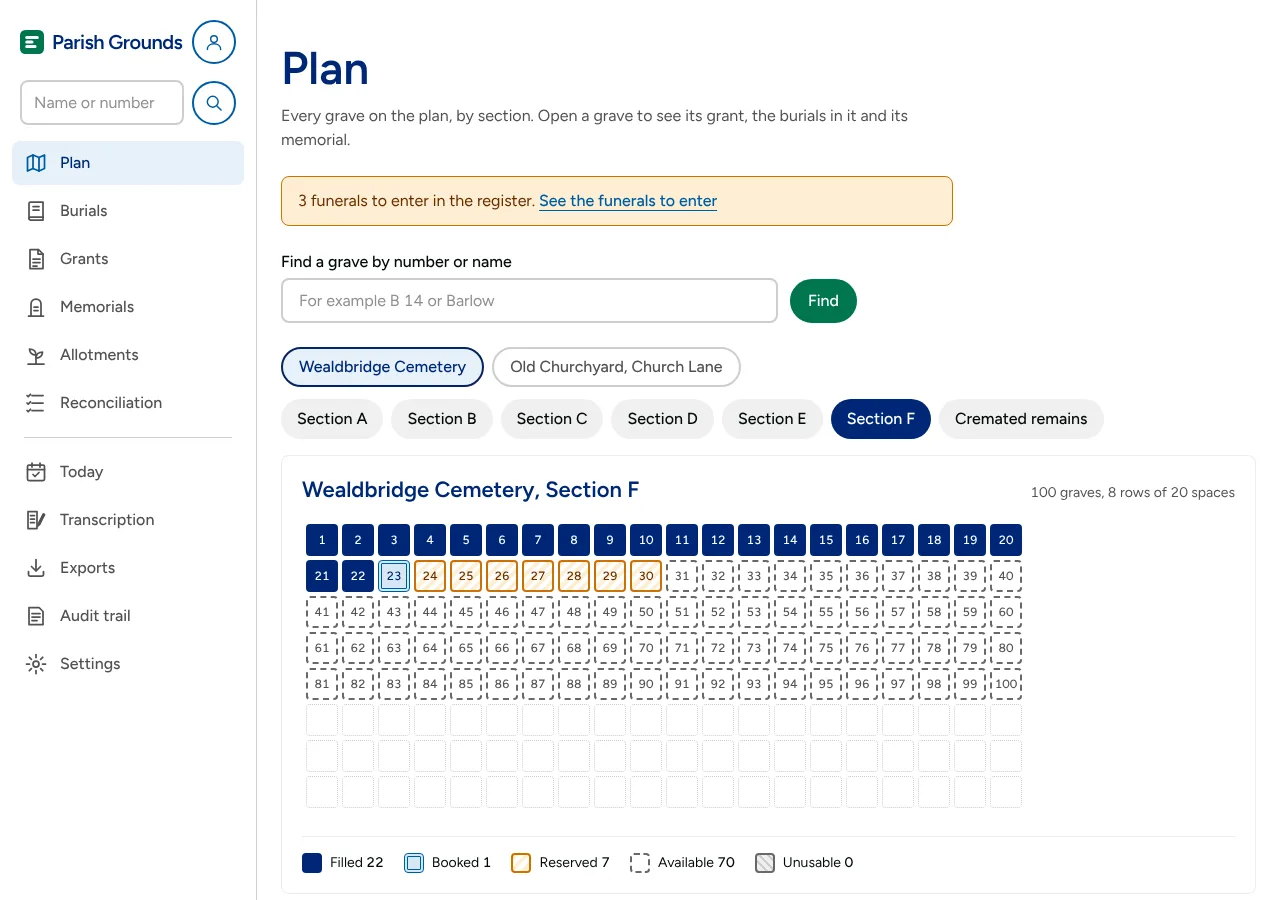
Every grave numbered and marked
Each grave is marked filled, reserved or available, in words as well as colour. Booking a reserved grave for anyone else brings up a warning, so it is not sold twice.
Article 9(1) requires "a plan showing and allocating distinctive numbers to" graves. Read article 9 on legislation.gov.uk
The register of burials
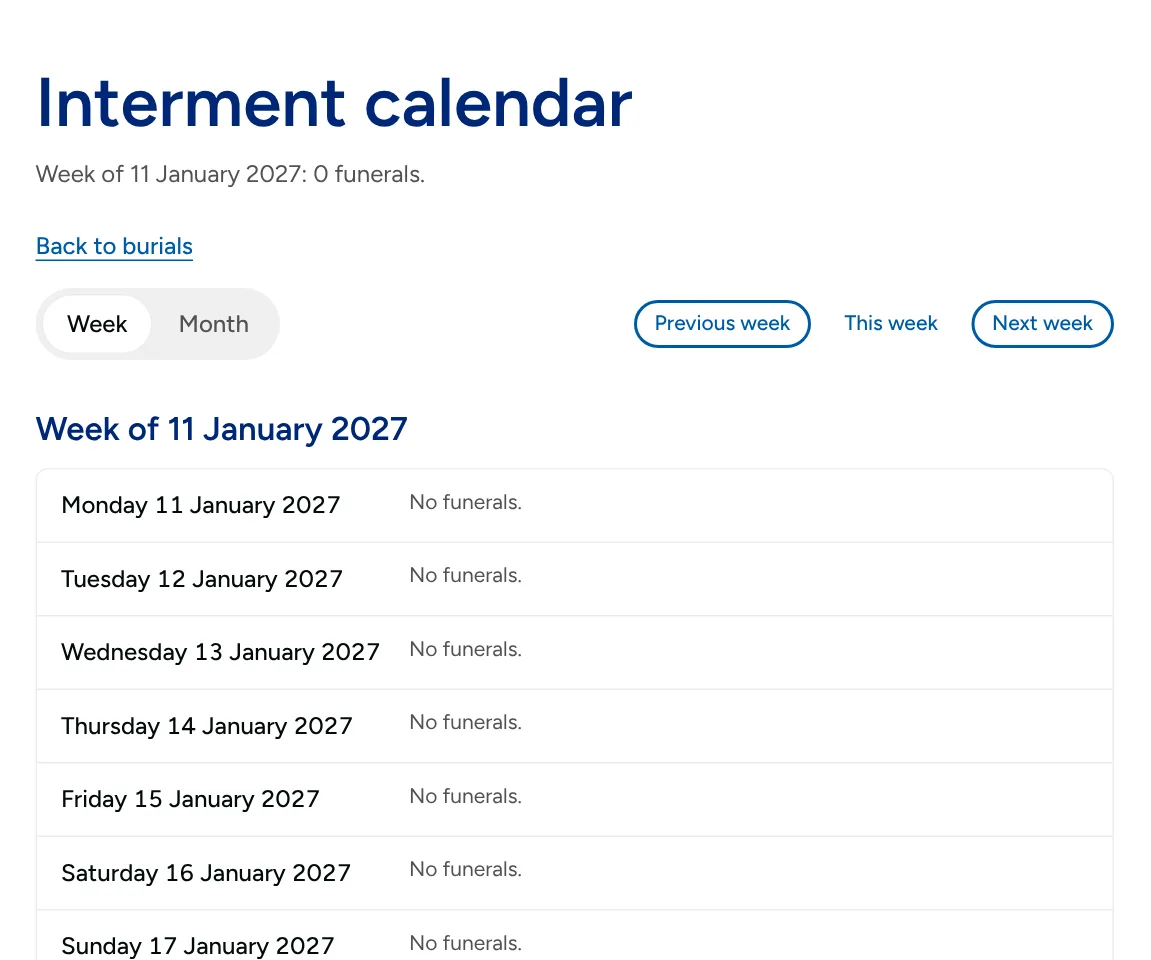
Each interment recorded against its grave
Each booking goes on the interment calendar, then into the register.
Article 11(1) requires "a register of all burials in a cemetery". Read article 11 on legislation.gov.uk
Register pages in the book's layout
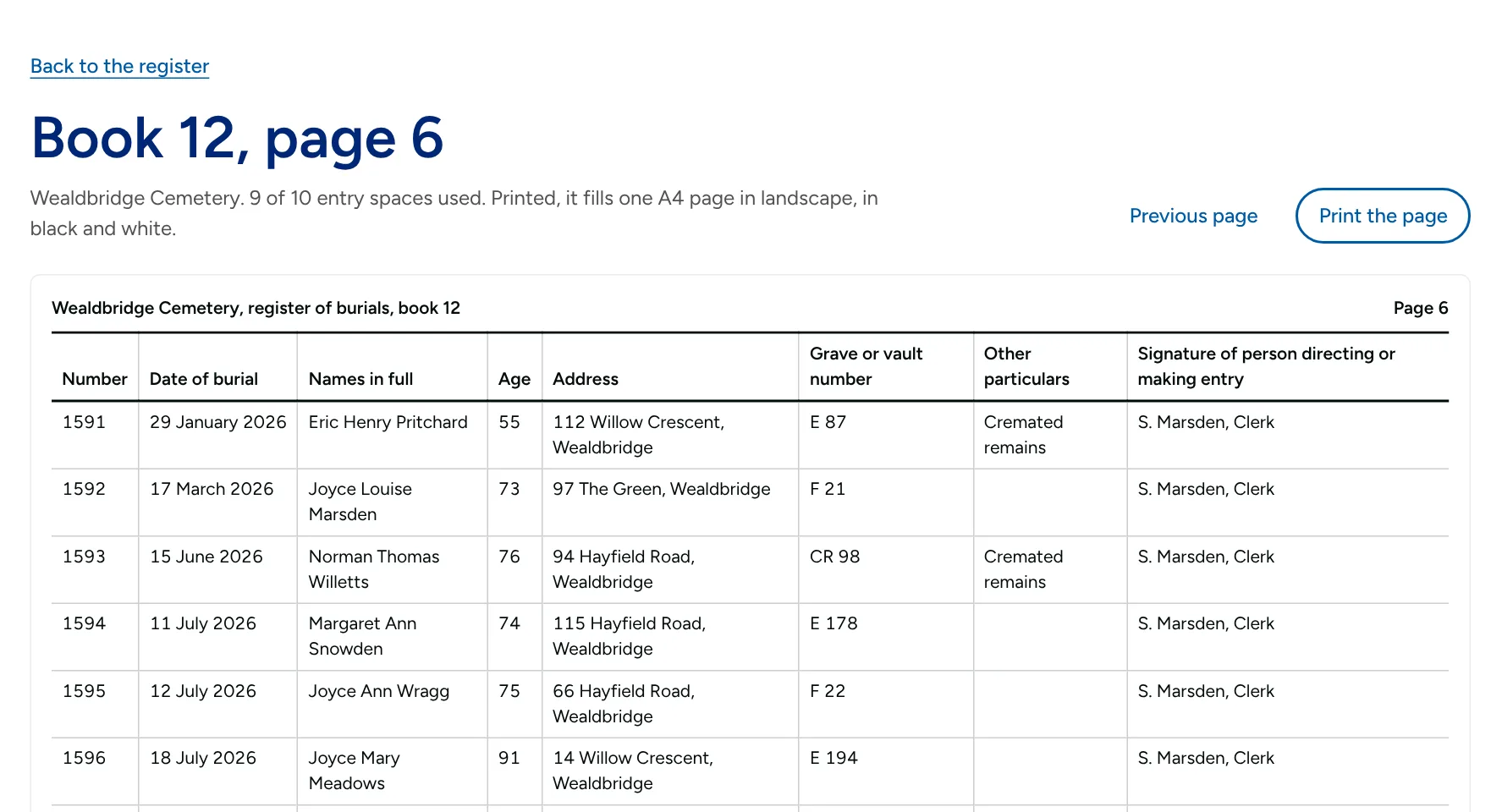
Pages printed for the bound book
Each page prints in the columns the Order lists, on a numbered page.
Article 11(3) says the pages "shall be numbered and shall be printed in columns". Read article 11 on legislation.gov.uk
The register of grants
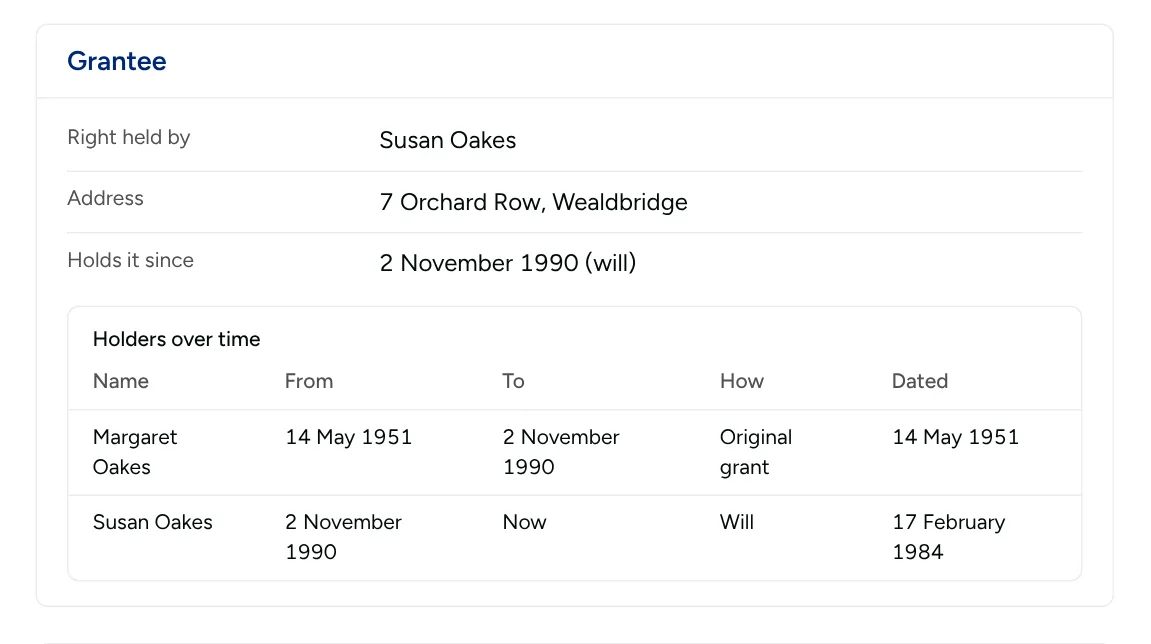
Grants, deeds, transfers and expiry
Issue each grant and print its deed. On a transfer, the earlier holders stay on the record.
Schedule 2 says these rights "may be assigned by deed or bequeathed by will". Read Schedule 2 on legislation.gov.uk
Memorial applications and inspections
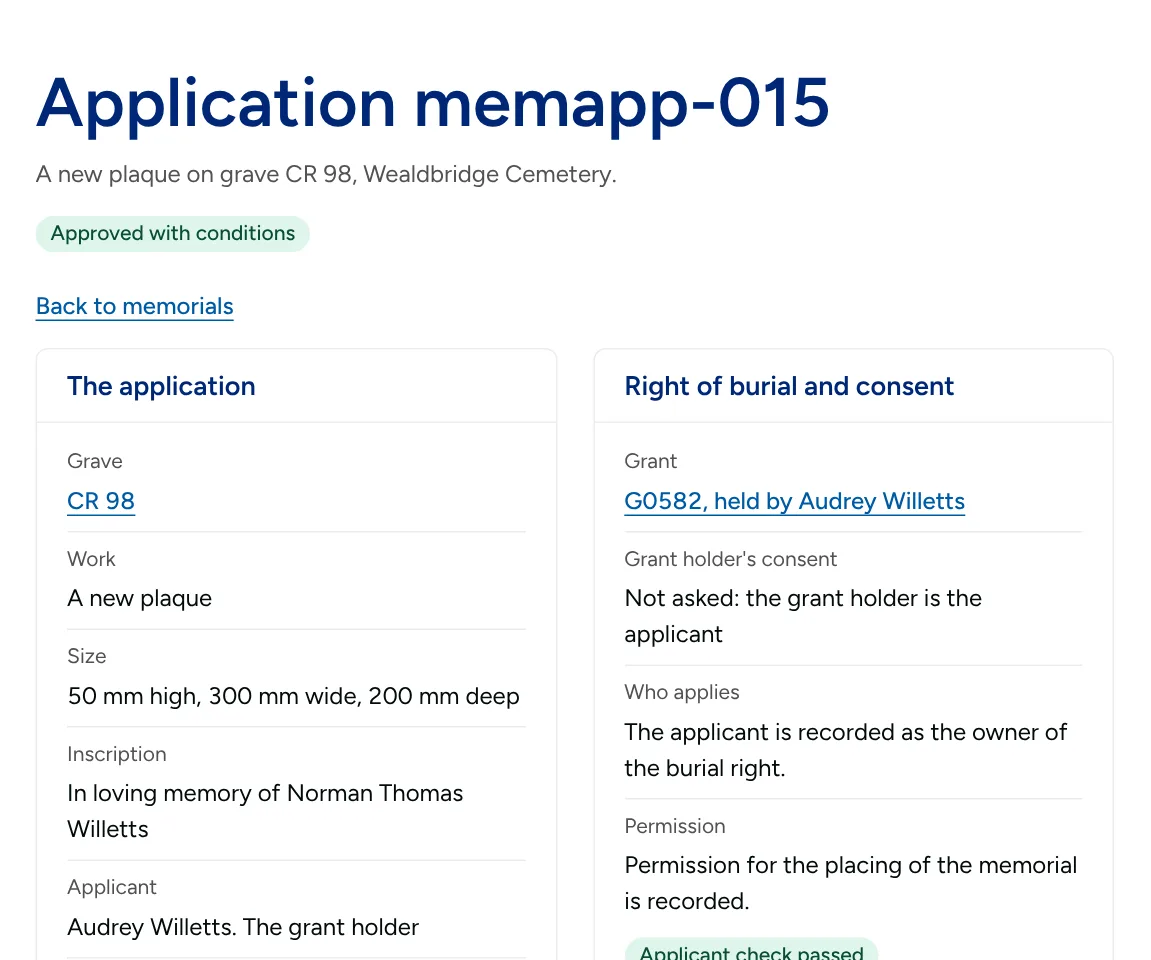
Each memorial on the grave's record
Each application records the consent, the fee and the decision. Inspections are recorded from a phone, with photos.
Schedule 2 requires "the permission of the officer appointed for that purpose". Read Schedule 2 on legislation.gov.uk
The table of fees
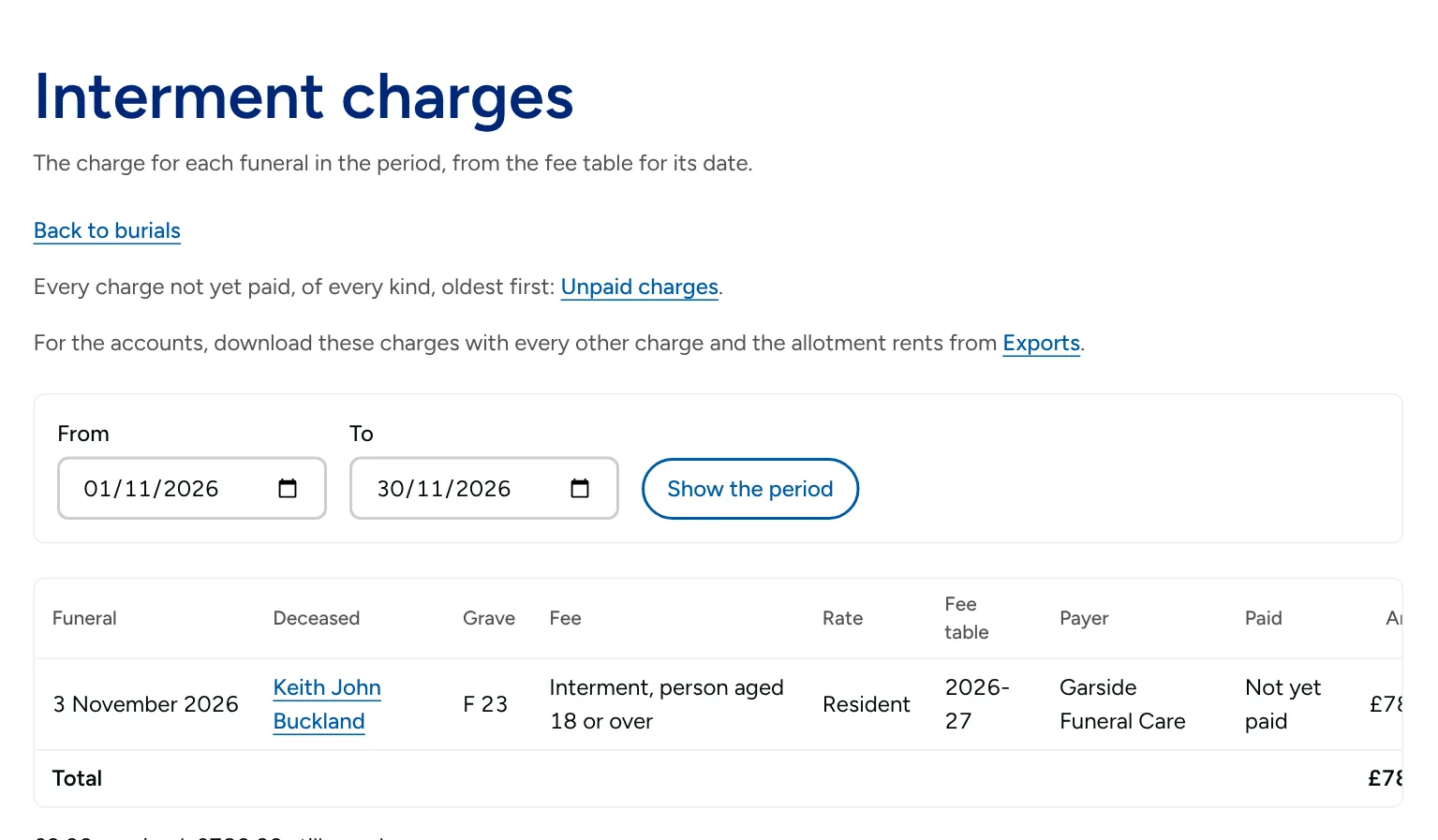
Every charge from the table
Each charge uses the resident and non-resident rates in that year's table.
Article 15(3) requires "a table showing the matters in respect of which fees or other charges are payable". Read article 15 on legislation.gov.uk
Searches and certified copies, with a fee log
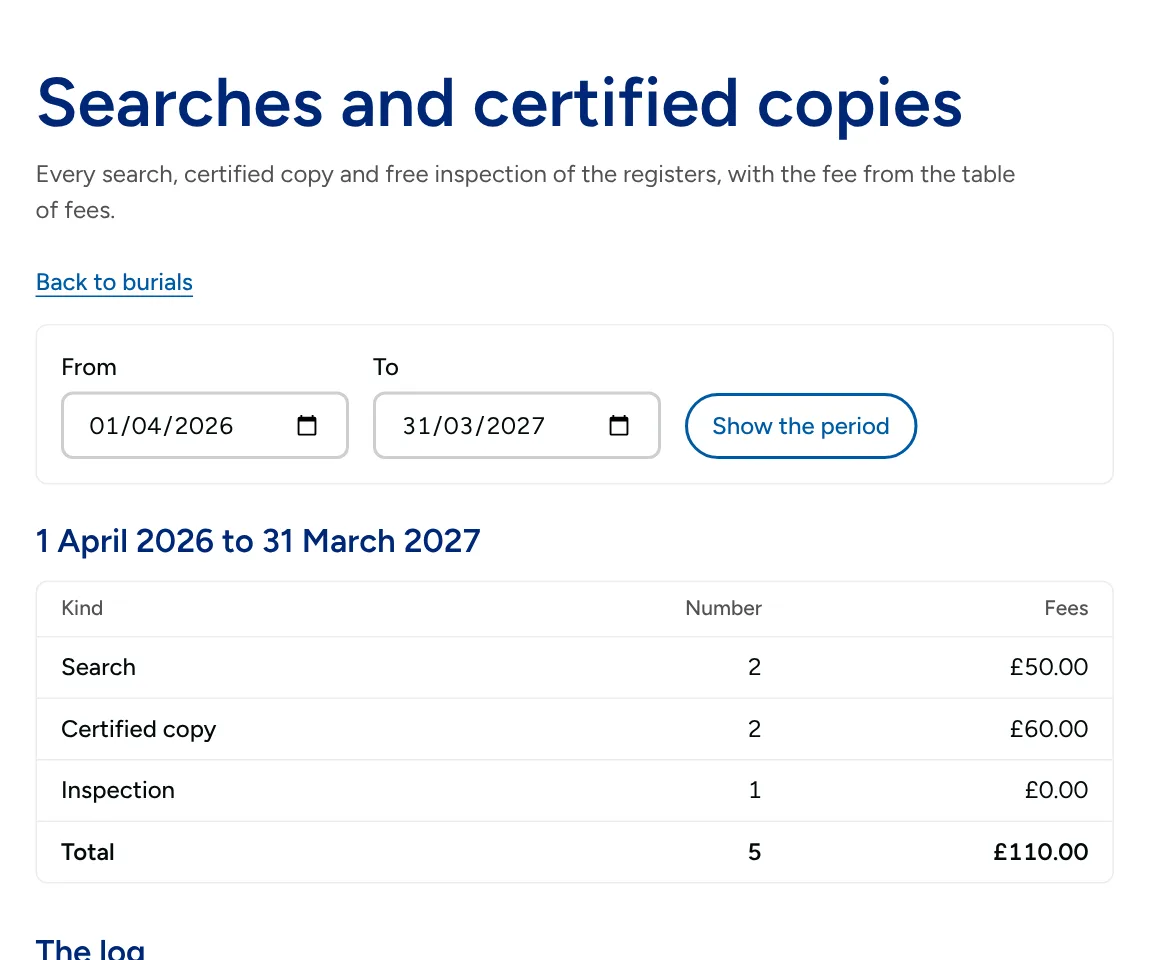
Each request logged with its fee
Log the request and its fee, then print the copy from the entry.
Article 11(8) lets a burial authority "charge such fees as they think proper" for searches. Read article 11 on legislation.gov.uk
Keeping the records safe
An audit trail, and a copy the council holds
Every change goes in the audit trail. Every register exports as CSV at any time.
Article 12 asks that records "be stored so as to preserve them from loss or damage". Read article 12 on legislation.gov.uk