Data and security for cemetery records
Who sees the records, and what they hold.
The audit trail, the access levels, the export and the personal data the records hold.
This website
Essential cookies only, and no analytics
This website sets only essential cookies and uses no analytics. Its forms store what is sent on this website's server; when our email service (Resend) is switched on, it also emails us one copy of each submission.
- Cookies on this website
- Essential ones only: one keeps a buyer signed in, two keep a visitor's own copy of the demo and the role they picked.
- Analytics and tracking
- None, this website uses no analytics or tracking.
- Forms on this website
- The forms store what is sent on this website's server, with the page of this website the visitor came from. When our email service (Resend) is switched on, it also emails us one copy of each submission; when it is not, nothing is sent anywhere else.
Backups
Exports at any time
The council can export every register as CSV at any time.
Article 12 asks that records "be stored so as to preserve them from loss or damage". Read article 12 on legislation.gov.uk
Audit trail
Who changed what, and when
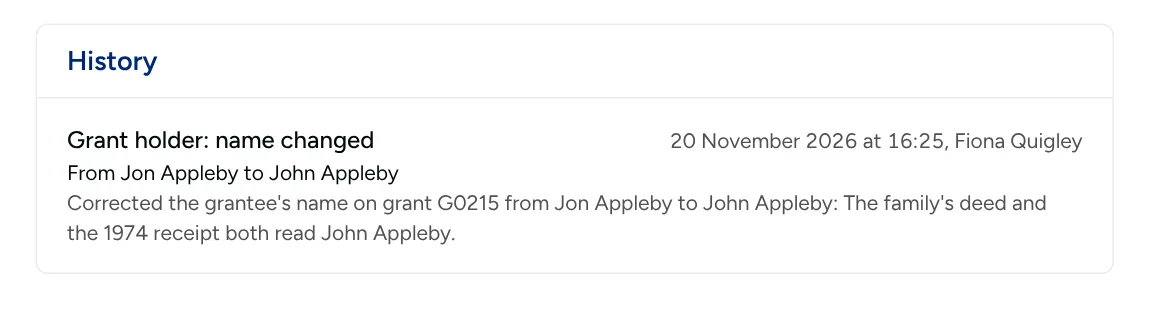
Every change goes in the audit trail, and a corrected entry keeps its earlier value.
Access levels
One role and one access level each
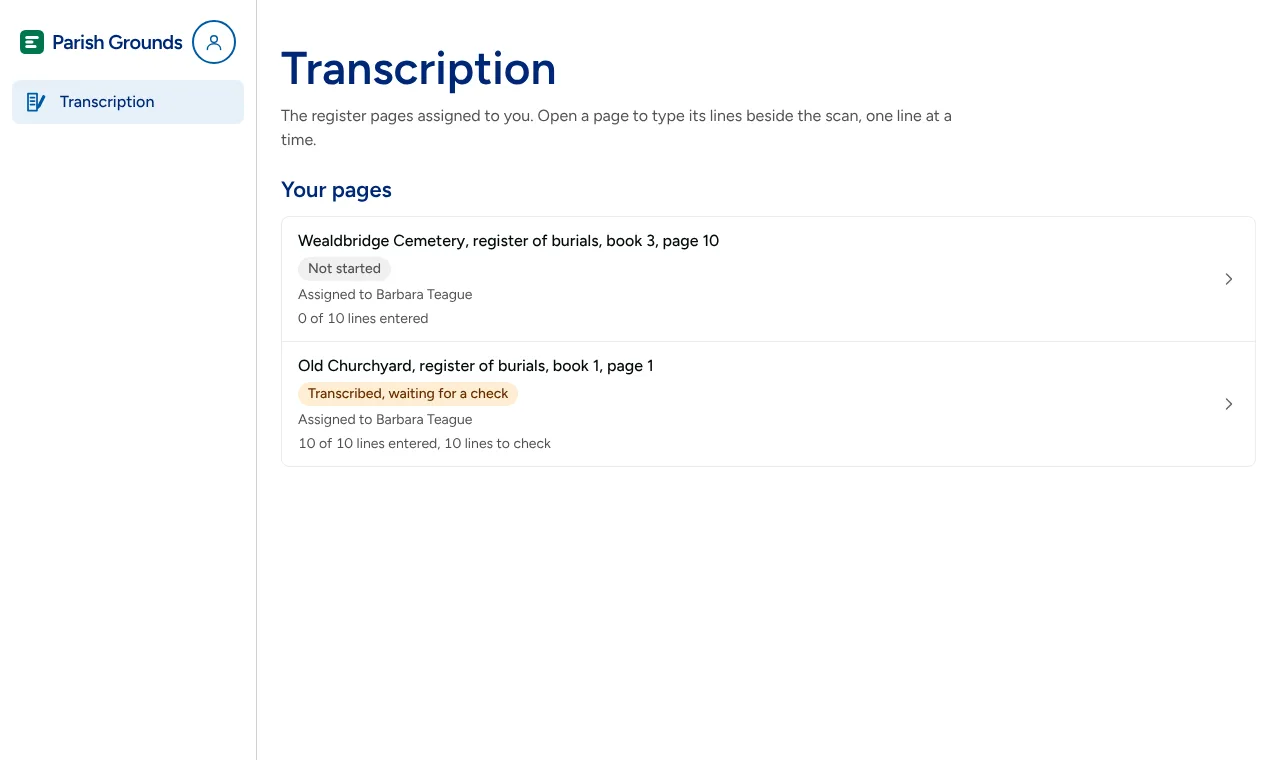
Staff have full access, volunteers transcription only, and councillors and the internal auditor read only.
Export
Every record exports, at any time
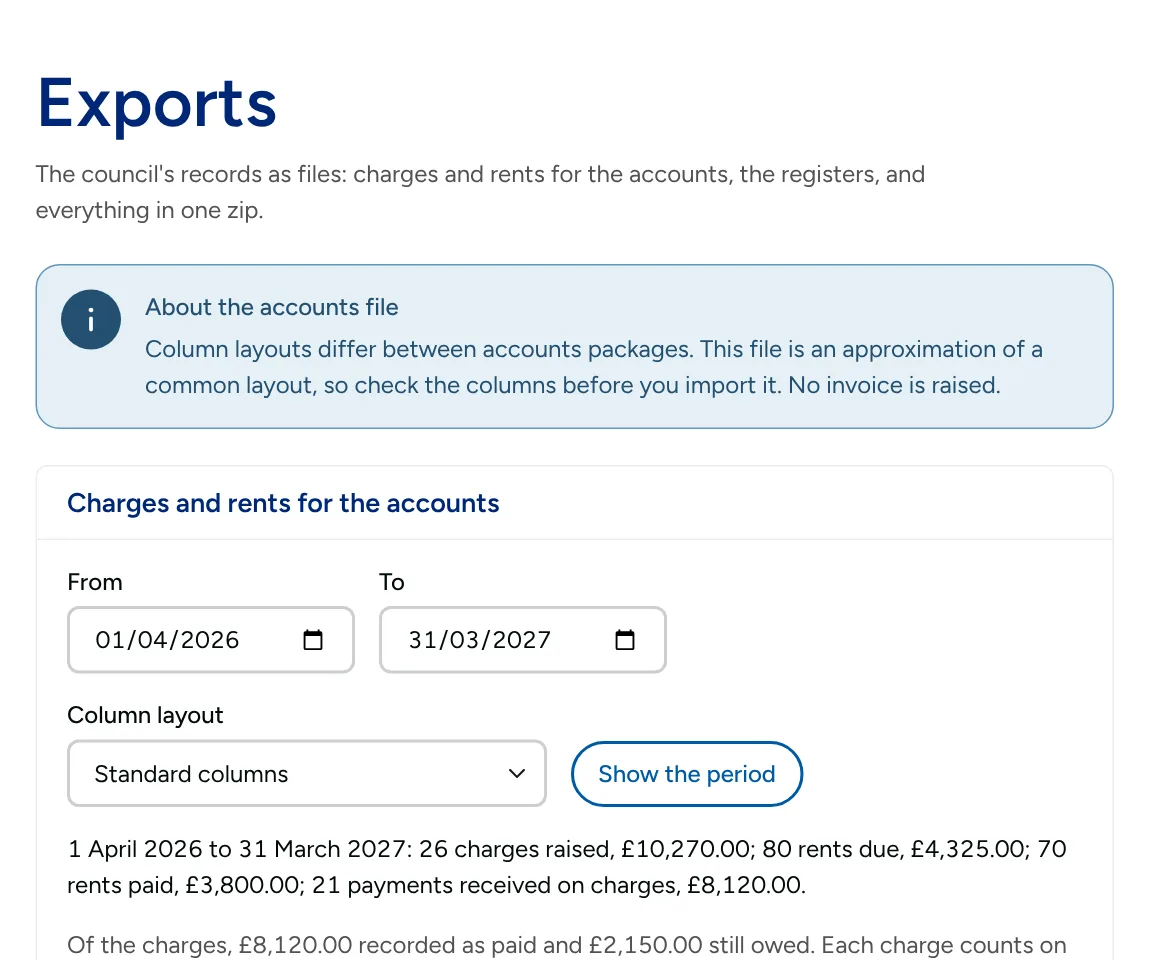
Every register, the plan, the fees and the allotment records export as CSV, with the scans and photos in one zip.
Personal data
What the records hold, and why
The council is the controller of its records, and the company that runs Parish Grounds processes them for it.
Grantees
Name, address, the grave and the grant.
Why: The register of grants records them.
The deceased
The entry in the register of burials.
Why: The register holds an entry for each burial.
Applicants and agents
The funeral director, mason or family member who applies.
Why: Each application records who made it.
Plot holders
Name, address, the plot, the tenancy and rent.
Why: The allotments module keeps each tenancy.
Applicants on the waiting list
Name, address and the date added.
Why: The list is the council's record of demand.
Staff, volunteers and councillors who use it
Name, email address and access level.
Why: The audit trail shows who changed what.